
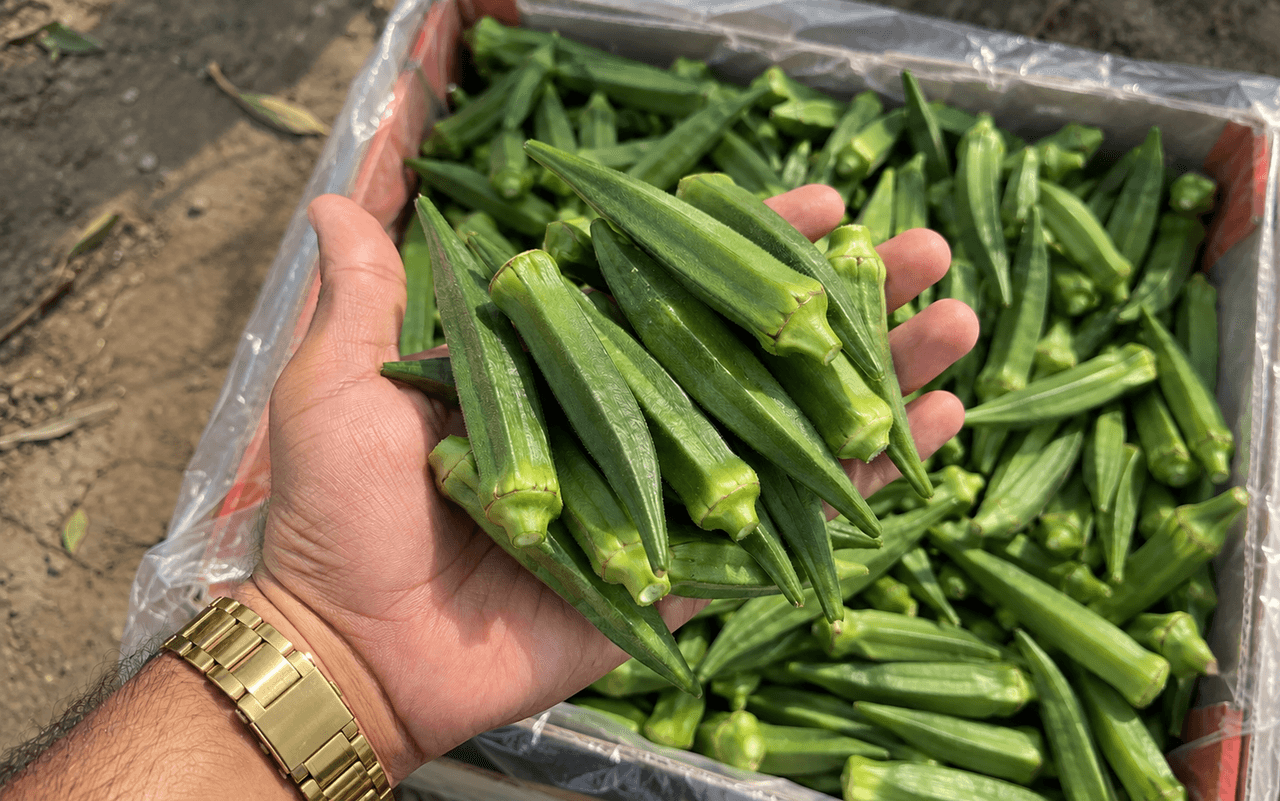
India grows more okra than any other country by a wide margin, over 60% of world output, ahead of every other producer combined. Most of that never leaves India. The share that does export has to clear a size grade, a pesticide-residue check, and, depending where it's headed, a naming problem most first-time exporters don't see coming.
The name problem
List a product as "Okra" and a US buyer finds it. List it the same way for a Gulf buyer and you've made yourself harder to find than you need to be. The standard Arabic trade and culinary term across the Middle East is Bamia (also spelled Bamya), and it's what actually gets typed into search bars and B2B directories there. It isn't a different product or a regional variety; it's the same vegetable under the name the market actually uses. The UK and Caribbean lean toward "Lady's Finger" instead of "Okra" for the same reason: same crop, different search habit by region.
What export grade means in practice
Okra is a statutory AGMARK commodity. Export spec runs 8–12cm pods, 1–1.5cm diameter, dark green, tender, and non-fibrous. The fibrous texture that ruins a pod shows up once it's left on the plant past this size window, which is a timing problem at the farm, not something a packhouse can sort its way out of. Packed 5kg or 10kg in ventilated corrugated board, or 5kg EPS thermocol, shelf life runs 8–12 days at 8–10°C.
Lighter paperwork than its neighbours in the same crate
Every fresh okra shipment carries the same baseline as the rest of this catalog: Phytosanitary Certificate from DPPQS, APEDA registration with HortiNet traceability, Certificate of Origin, FSSAI health certificate. Where it differs from green chilli, drumstick, bitter gourd, and curry leaf: those four sit on APEDA's shortlist for a mandatory enhanced pesticide-residue protocol before export. Okra doesn't. Standard FSSAI and phytosanitary compliance is what a consignment actually needs, one real reason okra can move faster through documentation than some of its cousins.
Where it ships easily, and where the answer is genuinely "we'd need to check"
Singapore is the simplest of the six markets we track: no okra-specific treatment requirement, and by Singapore's own produce-import data, the English name "okra" is what's actually used there commercially rather than a distinct local term. This isn't yet a high-volume trade lane, but nothing in the regulation stands in the way of one. UAE is straightforward too, riding the strength of Bamia's recognition in that market, with no okra-specific treatment beyond the standard baseline.
USA, Indonesia, and Thailand are the three where we don't publish a blanket "yes" for okra either, gated by the same commodity-by-origin-country approval systems we cover in more detail in our green chilli export guide. We run the same live check with a customs broker before quoting an okra order to any of the three, rather than assuming a green light because the paperwork elsewhere is routine.
What ships in an okra consignment
Phytosanitary Certificate, APEDA/HortiNet registration, Certificate of Origin, and FSSAI health certificate: that's the full document set for the markets where clearance is confirmed. Full grade spec, packaging options, and current lead time are on the okra product page.
— Nitik · Darsavio EXIM